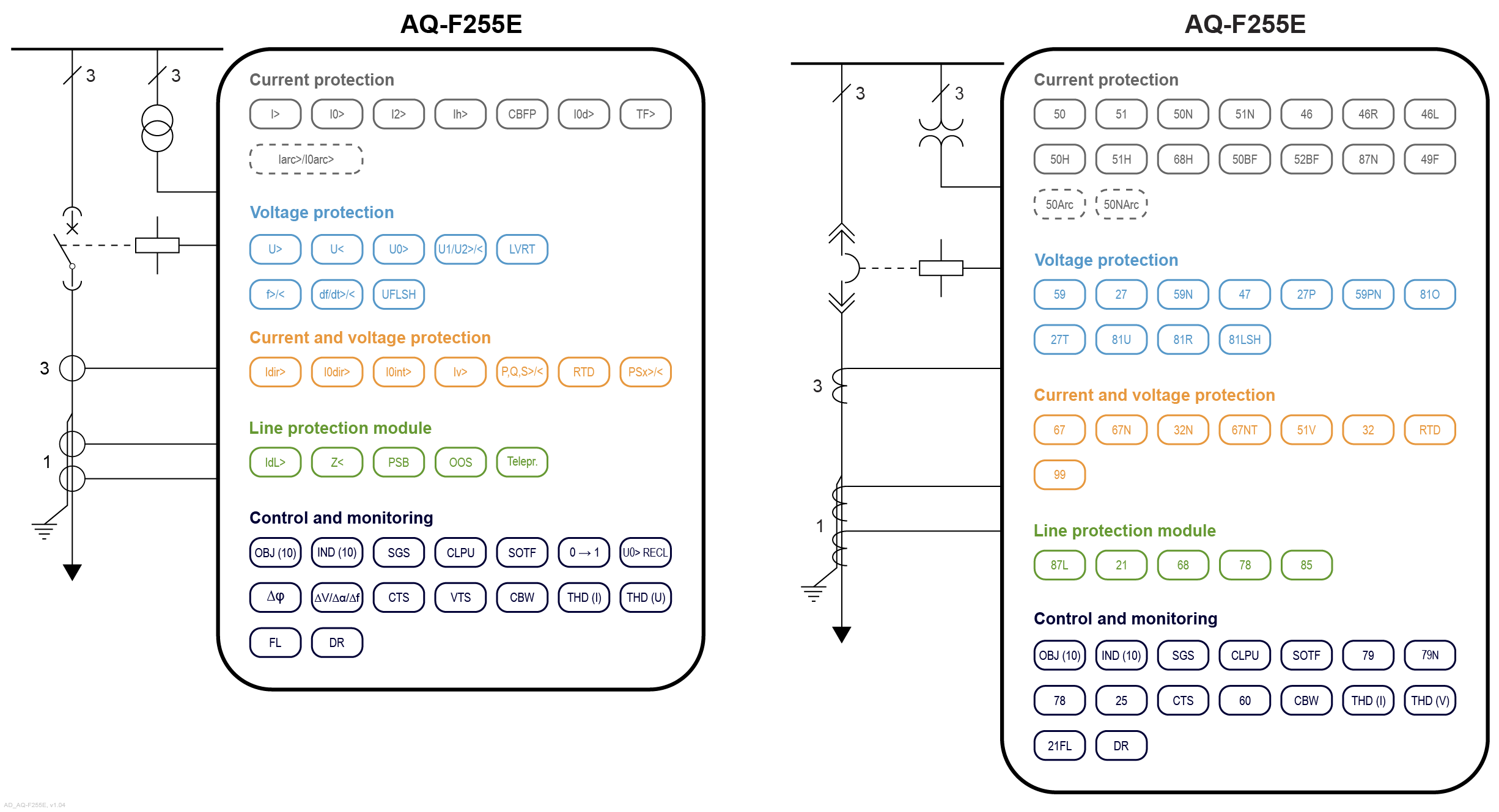
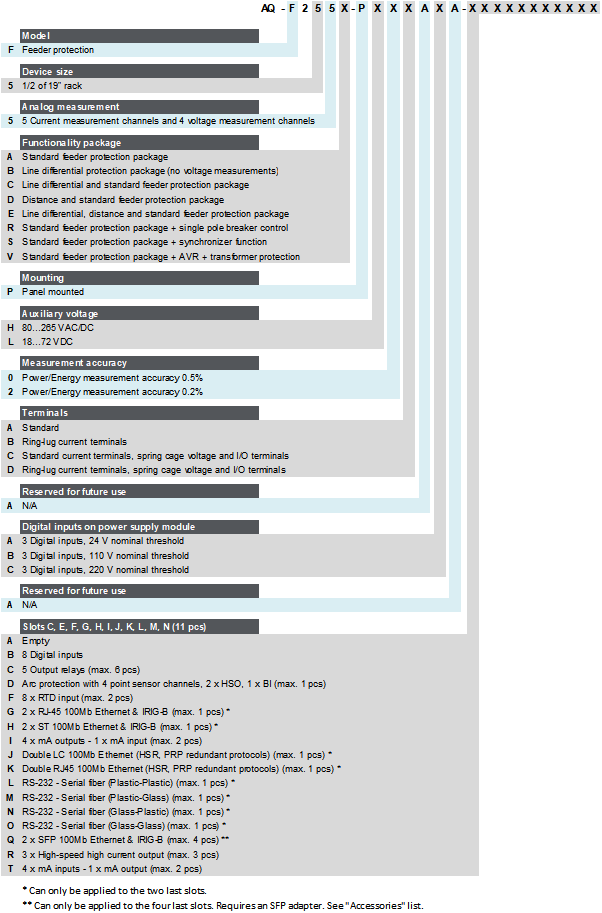
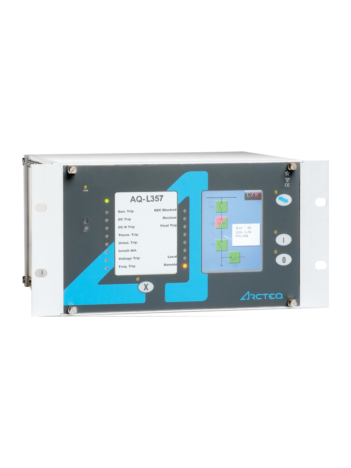
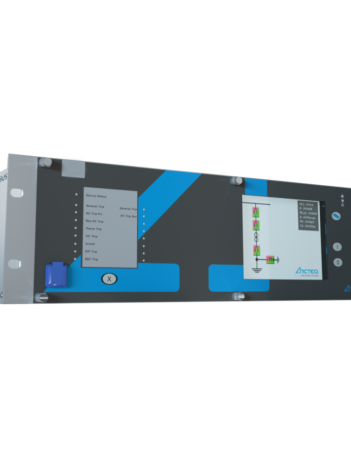
AQ-F255E offers a modular protection and control solution for line protection applications that require a large I/O capacity. It integrates line differential protection and distance protection as well as full feeder protection functionality in a single device.
Innovative line segment-based distance protection provides fast, selective and reliable protection by operating based on the principle of impedance measurement between the relay location and the fault point. The function allows protection schemes to be adjusted individually for each line segment using their real, independent impedance values instead of average values. This reduces the risk of unwanted operations through enhanced resistive reach and fault location accuracy, and improves selectivity and overall reliability. The segment-based distance protection can also distinguish between faults in underground cables and overhead line segments. Line segment-based distance protection also includes power swing block and out-of-step protection functions.
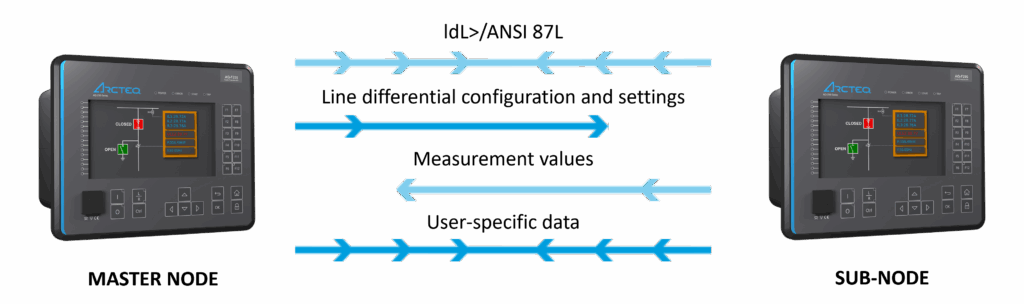
Line differential protection uses Arcteq’s smart dedicated process bus for communication between the master node and sub-node devices. It transfers both standard data and up to 64 user-defined signals, and automatically synchronizes the line differential protection settings from the master node device to the sub-node device. The process bus handles the compensation for delays in communication, which means that no external time synchronization is needed.
Line differential protection with a smart dedicated process bus.
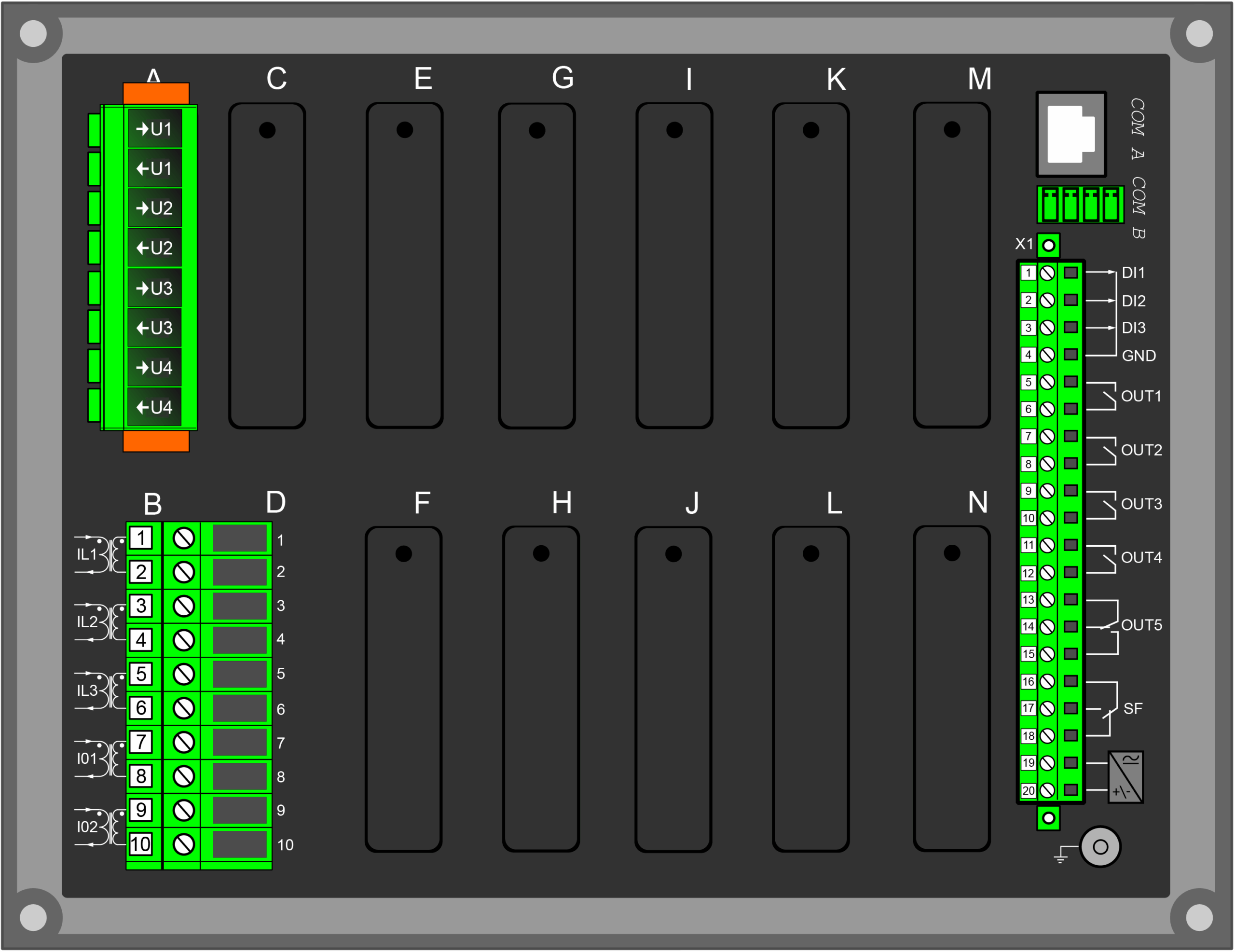
You can add up to eleven (11) I/O or communication modules into the device for extensive monitoring and control applications. AQ-F255E communicates using various communication protocols, including communication according to the IEC 61850 standard.
Highlights:
Innovative line segment-based distance protection function enhances resistive reach and fault location accuracy, particularly in mixed network, reducing the risk of unwanted operations.
Line differential protection for two line terminal ends:
Especially suitable for e.g. substations connecting wind and solar power facilities to the power grid.
Standard settings for communication – only the leader unit needs to be selected.
Master node device synchronizes transfers, configurations, and settings to the sub-node device.