We are pleased to announce the release of the AQ-ONE protection relay firmware! Below please find the highlights of the release.
Highlights:
Unlimited applications – a wide range of application function packages and additional function packages can be tailored, upgraded, or changed to another package to deliver the functionality required for each application.
Line segment-based distance protection that makes it easier to adapt distance protection to varying load conditions caused by the integration of distributed generation, often based on renewable energy sources.
Line differential protection that has been engineered to deliver performance, fast operation and everything else that is expected from a modern line differential protection. Moreover, it is a plug-and-play device that is easy to configure, delivered with standard communication settings.
Load shedding function (UFLS; 81LSH) to shed loads during frequency disturbances caused, for example, by an imbalance between power generation and load demand.
Cybersecurity improvements for communication between the protection relay and the AQtivate tool.
AQ-ONE is everything in one
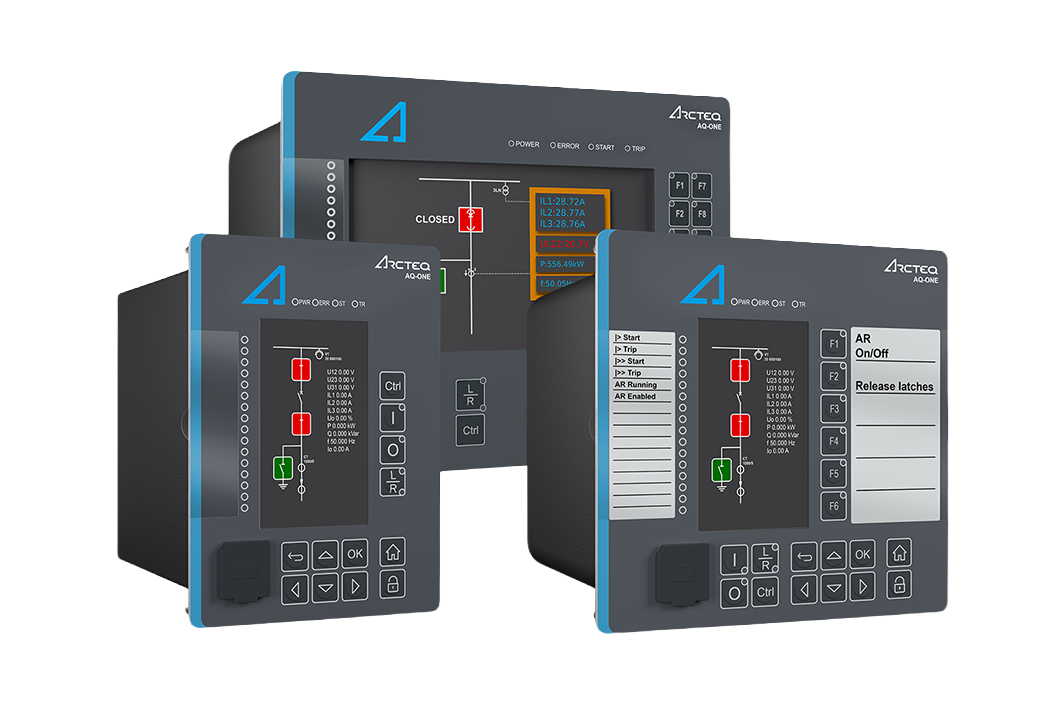
AQ-ONE has been designed as a unified concept with true scalability. One software environment defines functionality and configuration, while a single hardware platform, available in three mechanical sizes, enables cost optimization and ensures perfect fit for every installation. It is flexibly packaged and optimized for power systems up to 150 kV, while also offering a powerful and reliable solution for higher voltage grids depending on the application.
AQ-ONE relays are based on extensive function packages that include the functionality typically needed for each application. The packages can be tailored, upgraded, or changed to another package at any time to deliver the functionality required for each application.
For more information about the AQ-ONE concept and function packages, please click the button below.
Power systems are evolving with the integration of distributed generation, often based on renewable energy sources. This leads to varying load conditions and changing fault current contributions, which can make conventional distance protection more difficult to set correctly and less accurate during operation.
With line segment-based distance protection, protection schemes are easier to adapt and can be set more accurately to match the actual protected line by using the real values of each segment instead of averaged values. This improves resistive reach and fault location accuracy, especially in mixed networks.
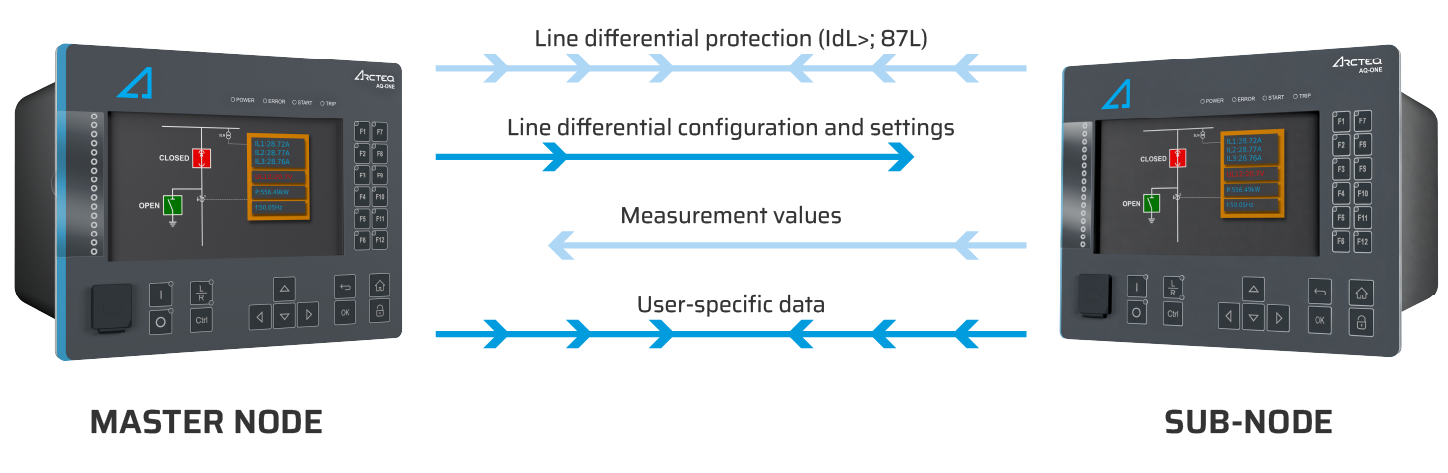
AQ-ONE line differential protection provides a cost-efficient solution, for instance, for substations connecting wind or solar power facilities to the grid. It is easy to configure and is delivered with standard communication settings. The user only needs to designate the master node unit to set up communication, which saves time during commissioning.
The dedicated process bus developed by Arcteq introduces a significant innovation, enabling extensive two-way data exchange between the substations. The process bus…
transfers both standard data and up to 64 user-defined signals.
automatically synchronizes line differential protection settings from the master node to the sub-node device, reducing setup time and minimizing errors.
compensates for communication delays, so no external time synchronization is required.
enables fast and easy implementation of other applications, such as an ultra-fast transfer trip with 3–5 ms trip of the remote end.
Load shedding
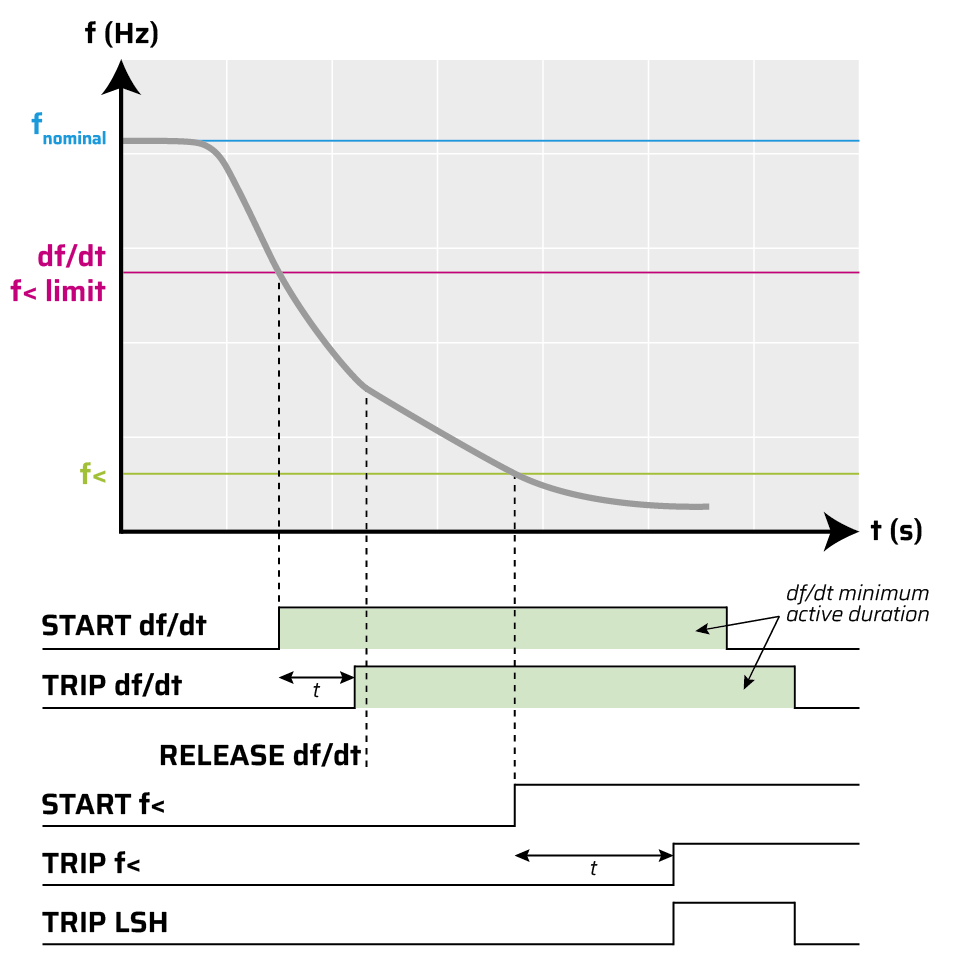
The load shedding function is used to shed loads during frequency disturbances caused by, for example, an imbalance between power generation and load demand. AQ-ONE’s load shedding function allows you to choose whether the function operates based on overfrequency or underfrequency, rate-of-change of frequency (df/dt), or a combination of frequency and df/dt criteria.
The overfrequency, underfrequency, and rate-of-change of frequency functions inside load shedding operate individually and have their own pickup and operation time settings. The function also supports both falling and rising modes, enabling overfrequency and underfrequency protections as well as increasing and decreasing df/dt.
The load shedding functionality is included in the Voltage Protection application function package, and accompanied by the required frequency protection functions. This makes it possible to a add voltage- and frequency-based load shedding functionality to a feeder protection configuration in accordance with the relevant TSO load shedding strategy. The load shedding function is also included in the Generator Protection application function package.
Software available for download
Firmware version v3.0.0 for AQ-ONE is available for registered users to download from the Documents & Software section on our website.
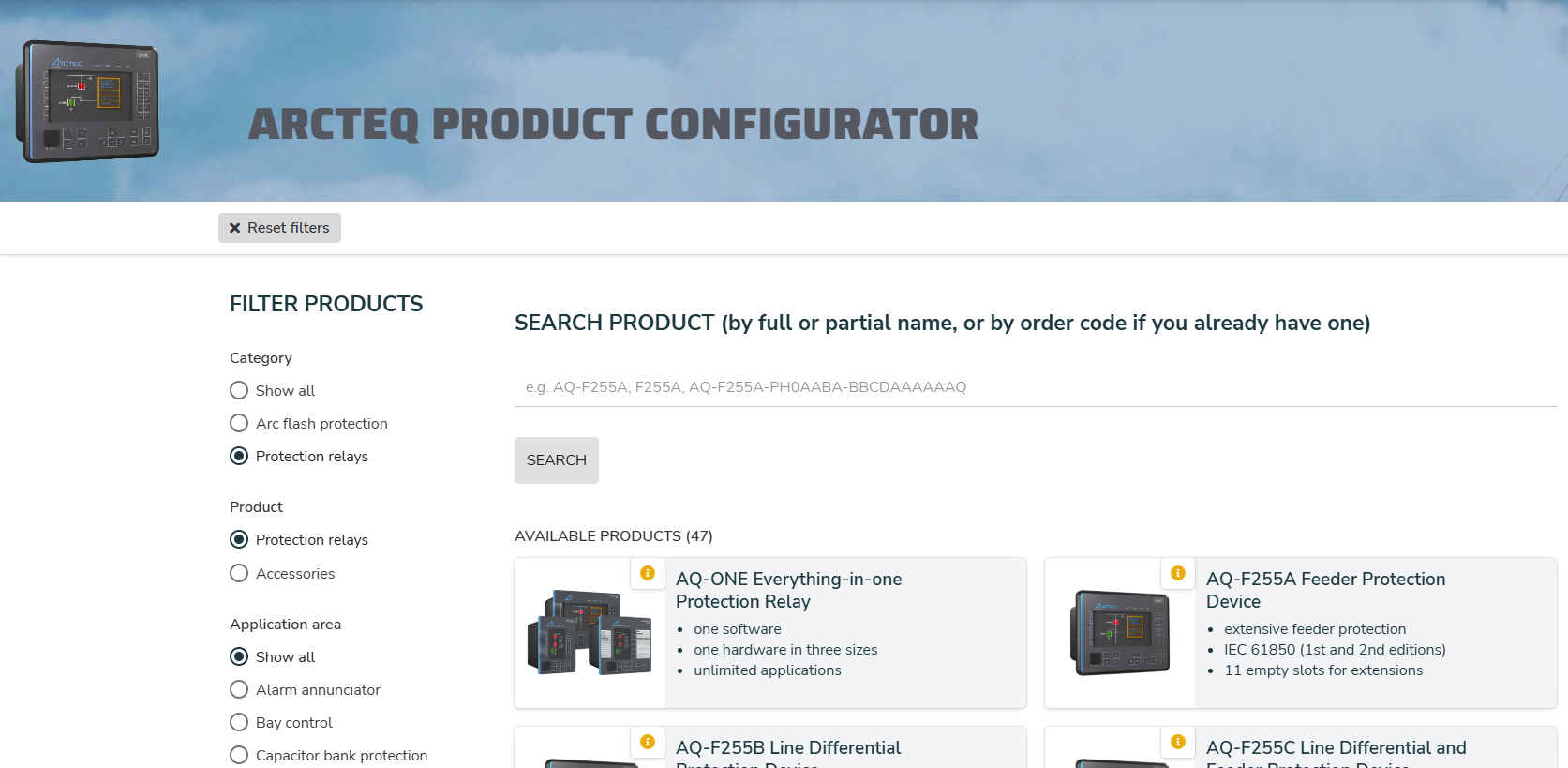
Arcteq product configurator helps you select the relevant application function packages and additional function packages. Once you have defined the required functionality and selected the device size, you can configure the hardware. You can find the product configurator here: