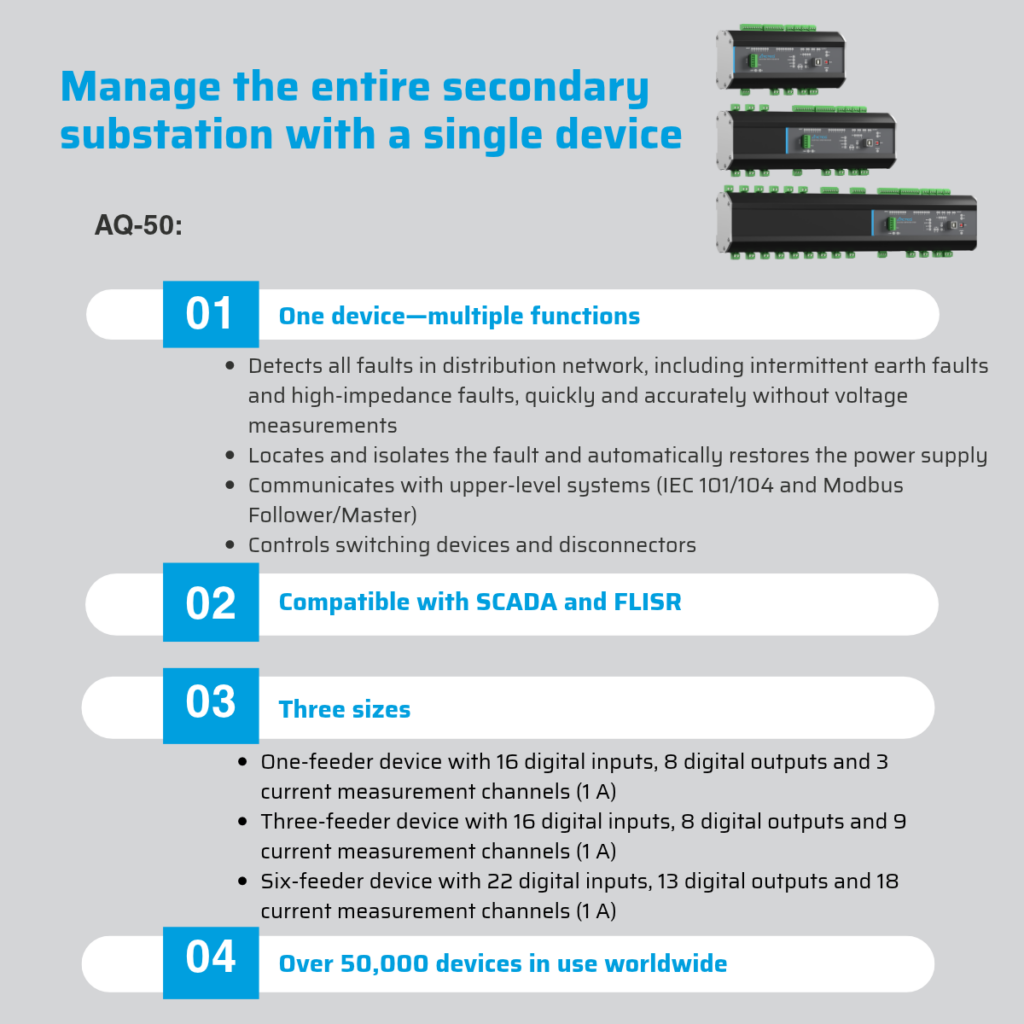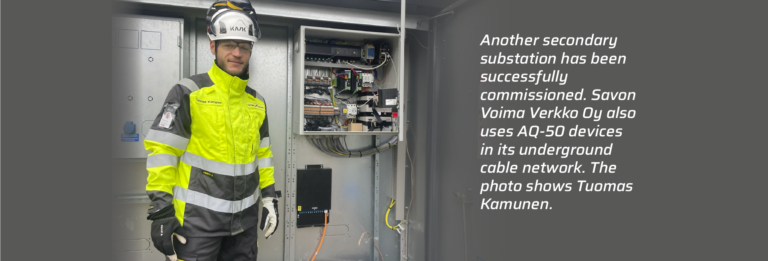
Savon Voima Verkko Oy’s journey with Arcteq’s AQ-50 fault detection device began as many encounters with new products or technologies do: with cautious interest and healthy skepticism about whether the device could really work. After learning more about the product, Savon Voima Verkko Oy decided to conduct a pilot project at three challenging overhead-line sections where faults occur frequently.
Did it live up to its promises?
Arcteq promises that AQ-50 detects every fault in the distribution network. This also applies to difficult-to-detect intermittent earth faults and faults with a fault current as low as 0.5 A.
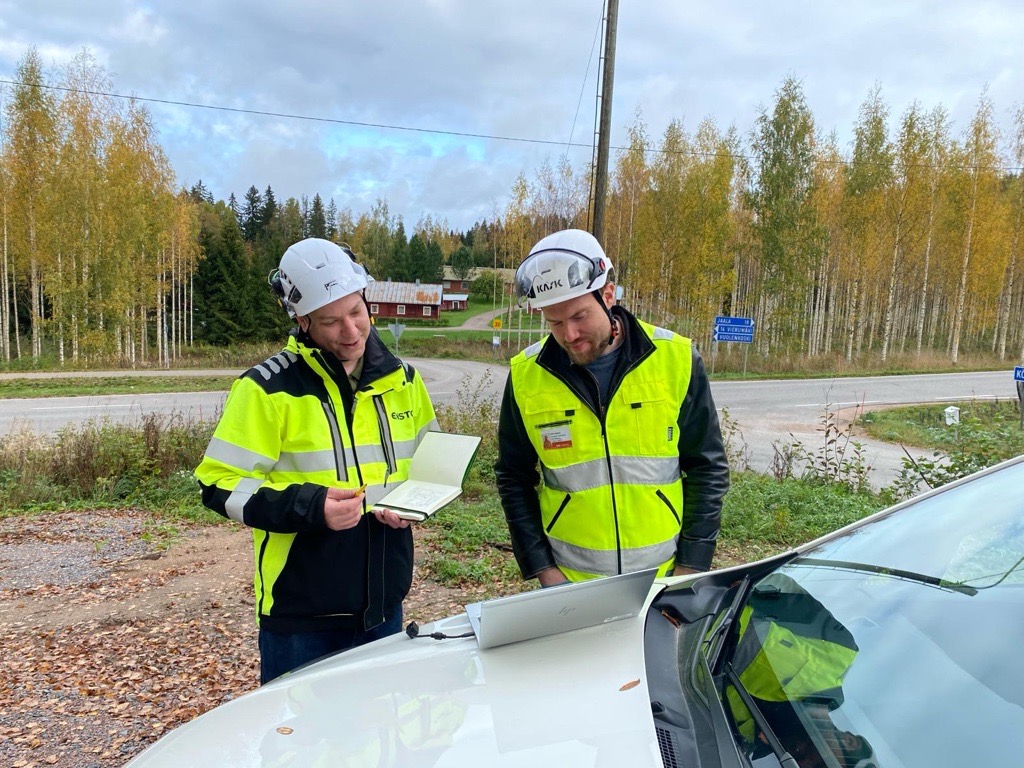
The purpose of Savon Voima Verkko Oy’s pilot project was to determine whether the solution worked in practice as well as the promises suggested. The pilot confirmed that the device did indeed detect every fault in the overhead-line sections, dispelling doubts about its performance. Timo Kiiski, Operations Manager at Savon Voima Verkko Oy, concluded that AQ-50 is a fault detection device that truly works.
Based on the pilot experience, Savon Voima Verkko Oy decided to deploy AQ-50 in its overhead-line network, integrated with Ensto’s Auguste Extra Smart load-break switches. AQ-50 devices now monitor a large share of the fault-prone branches in the overhead-line network. “This year, we also began using the fault detectors in our underground cable network, where we can utilize more of the device’s features,” says Tuomas Kamunen, Construction Manager at Savon Voima Verkko Oy.
Many distribution system operators rely on Arcteq’s fault detection device
DSOs KSS Verkko Oy and Kymenlaakson Sähköverkko Oy (KSOY) have also begun using AQ-50, encouraged by practical experience with the device. For some DSOs, fault detection was not even the primary reason for choosing it, although reliable fault detection remains the foundation of everything.
For KSOY, the most important reason for selecting AQ-50 was the ability to automate secondary substations. “We are using AQ-50 devices at an increasing number of locations in our network to automate secondary substations, including controlling disconnectors and switching devices in the substations, and of course for fault detection as well. When one device handles all of this, separate remote terminal units are no longer needed. Spare-parts management also becomes easier, and our system becomes more streamlined,” says Operations Manager Janne Malmström.
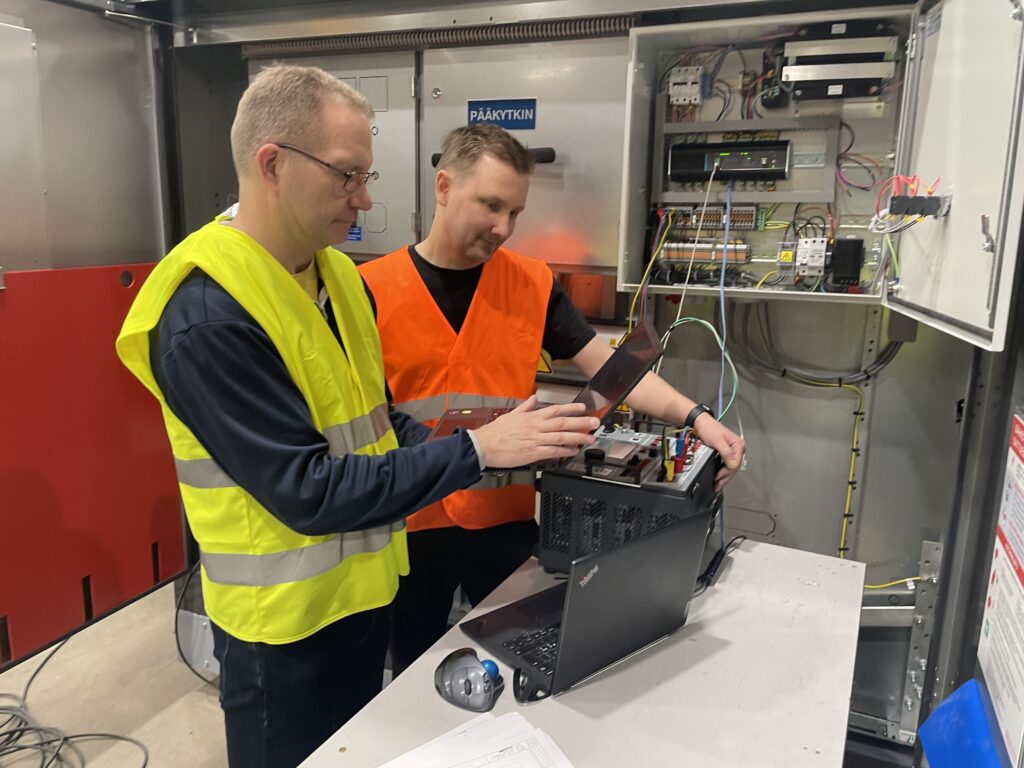
KSS Verkko Oy was the first company in Finland to deploy the AQ-50 fault detection devices and has several years of experience with them. The devices monitor the company’s overhead-line network and are also used in indoor and secondary substations at critical nodes in the network. “At these locations, isolating a fault quickly is extremely important, and the AQ-50 device has enabled us to do so successfully,” says Eemil Hyppänen, Operations Engineer at KSS Verkko Oy.
According to Hyppänen, AQ-50 is also easy to use. “I have programmed and connected devices to SCADA myself alongside my other operational duties.” As with KSOY, AQ-50’s versatility is essential to KSS as well: the device functions both as a fault indicator and as a remote terminal unit. “There are already several dozen devices at key nodes in our network, and we are installing more as part of refurbishment projects,” Hyppänen says.
KSS has also taken the first step toward even broader use of the AQ-50: during the summer, the first device was installed at a pole-mounted circuit breaker to trip faults. “We look forward to seeing how this implementation performs in practice,” Hyppänen concludes.
Manage the entire secondary substation with a single device